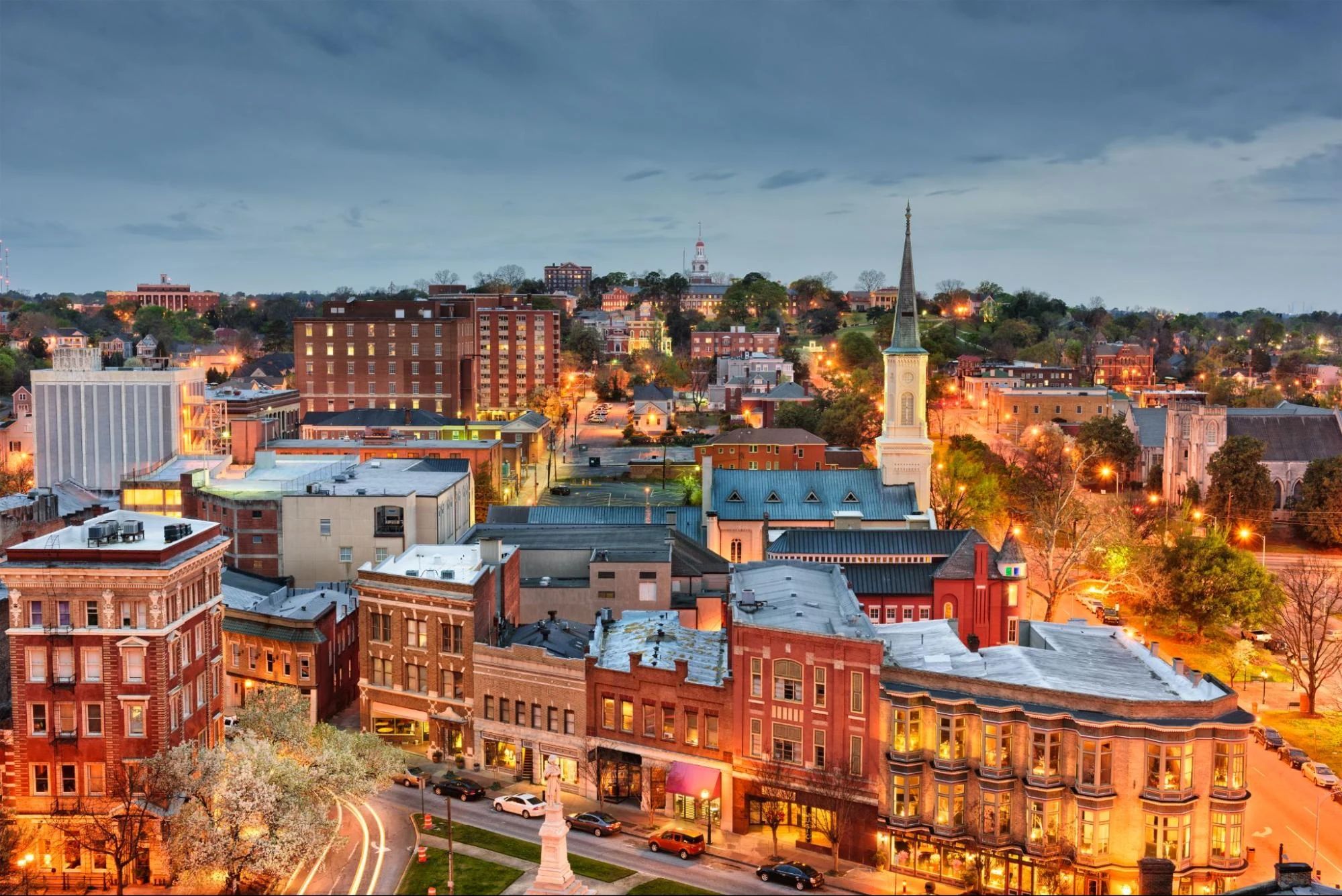
Macon's hotel stock splits into two distinct groups: the interstate corridor properties near the I-75 exits that serve highway travelers around the clock, and the smaller collection of hotels downtown near the Coliseum, Terminal Station, and the historic theater district that serve business and entertainment visitors. Both groups keep rooms occupied every night of a roofing project, which shapes how we schedule and detail the work.
A hotel roof project has to account for guests sleeping during the day as well as at night, since travelers on overnight shifts or long drives often check in mid-morning and need quiet through the afternoon. We ask hotel management for their actual guest pattern rather than assuming standard daytime-noise, nighttime-quiet hours apply, and we schedule the loudest phases, tear-off and fastening, around whatever quiet windows the property identifies.
Room block reservations for events at the Coliseum or a downtown conference tie directly to occupancy patterns hotel management can share with us in advance. A property that knows it's sold out for a specific weekend can flag that window as off-limits well before we finalize the schedule, rather than us finding out the morning a crew shows up.
Hotels near the I-75 interchanges see more exhaust and airborne grime from highway traffic than a property set back from the interstate, which accelerates membrane soiling and can mask early wear signs under a layer of road film. We factor that exposure into inspection frequency recommendations for corridor properties, since a membrane that looks dirty but sound from the ground can be hiding UV degradation underneath the film. A periodic wash-down of the field membrane, done carefully to avoid pressure-washing seams open, also gives a clearer read on actual membrane condition at inspection time and helps document any changes between visits.
Sign structures and illuminated pylon signs common at interstate exit hotels also add roof penetrations and electrical conduit runs that need coordination with the sign vendor when a reroof is scheduled, since disconnecting and resetting sign power incorrectly can leave a property without visible highway signage during peak travel periods.
Hotels operating out of older downtown buildings near the historic theater district sometimes carry architectural review requirements similar to other historic Macon structures, particularly where the roofline is visible from the street or where the building sits within a historic district overlay. We coordinate with the appropriate review process before finalizing material choices on these properties and match roof-edge and parapet detailing to the building's existing street presence where that's a requirement.
Rooftop bar and event space, increasingly common at downtown properties looking to make use of underused roof area, adds structural loading and life safety considerations well beyond a standard roof replacement scope. We involve a structural engineer early whenever a hotel is considering converting roof area to occupied amenity space rather than treating it as a straightforward reroof.
Hotels carry roof types beyond the main building field: pool deck structures, covered amenity spaces, and mechanical penthouses housing elevator equipment and central plant HVAC. Pool areas in particular deal with chlorine off-gassing and higher ambient humidity, which we account for in membrane and flashing selection around those zones. Mechanical penthouse roofs, meanwhile, often go years without inspection since they're the least visible part of a hotel property, and we flag them specifically during any hotel roof assessment.
Franchise hotels typically operate under brand standards that affect visible exterior elements, and some brand agreements require corporate approval before exterior work, including roofing that's visible from the street or from guest room windows. We ask early in the proposal process whether a property operates under brand standards requiring that kind of approval, and build the extra review step into the project timeline rather than treating it as a late surprise.
Yes. We ask for the property's actual guest pattern and schedule the loudest work phases around whatever quiet windows the hotel identifies, rather than assuming standard hours.
We generally recommend it. Highway exhaust and road film can mask early membrane wear, so more frequent checks catch problems before they show up as leaks.
Yes. We ask early whether a property needs corporate brand approval for visible exterior work and build that review step into the project timeline, including any brand-specific color or profile requirements for visible edge metal.
Yes. Both areas have different exposure conditions than the main roof field, and penthouse roofs in particular often get missed in routine inspections, sometimes for years at a stretch, until an elevator outage forces someone up there to look.
Yes. We coordinate with the appropriate review process before finalizing material and detailing choices on properties subject to historic district requirements.