Commercial roofing in Juliette, GA should begin with a documented assessment of membrane condition, seams, flashings, drainage, penetrations, and moisture before repair, coating, or replacement is selected. Juliette is a small place with two very different roofing needs sitting a few miles apart. Along the Ocmulgee River, Plant Scherer's support buildings, maintenance shops, and administrative structures make up some of the largest roof areas in Monroe County. In the historic village itself, a handful of storefronts clustered near the old cotton mill, including the café that draws visitors off I-75, cover a commercial footprint you can walk in ten minutes.
We don't work on the generating units themselves, but the ancillary structures around a plant of that scale, warehouses, maintenance bays, administration buildings, and equipment shelters, add up to real roof square footage with their own access and safety requirements. Getting on and off a roof near active plant operations means coordinating badge access, safety orientation, and lockout windows with the site well before a crew shows up, and building that lead time into the schedule rather than treating it as an afterthought. A plant of this size runs on tight internal maintenance windows, and a roofing crew that shows up without confirming an active shutdown window can end up standing around a locked gate rather than working.
Roofs in this immediate area also deal with airborne particulate that most commercial buildings never see. Ash and fine dust settle on low-slope membranes and metal panels over time, and that buildup holds moisture against the surface longer than a clean roof would, which shortens service life if it isn't accounted for in the maintenance plan. We factor that into inspection frequency rather than following a generic annual schedule, and we note it in writing when we recommend an accelerated inspection interval so the facility team has documentation to justify the added maintenance line item.
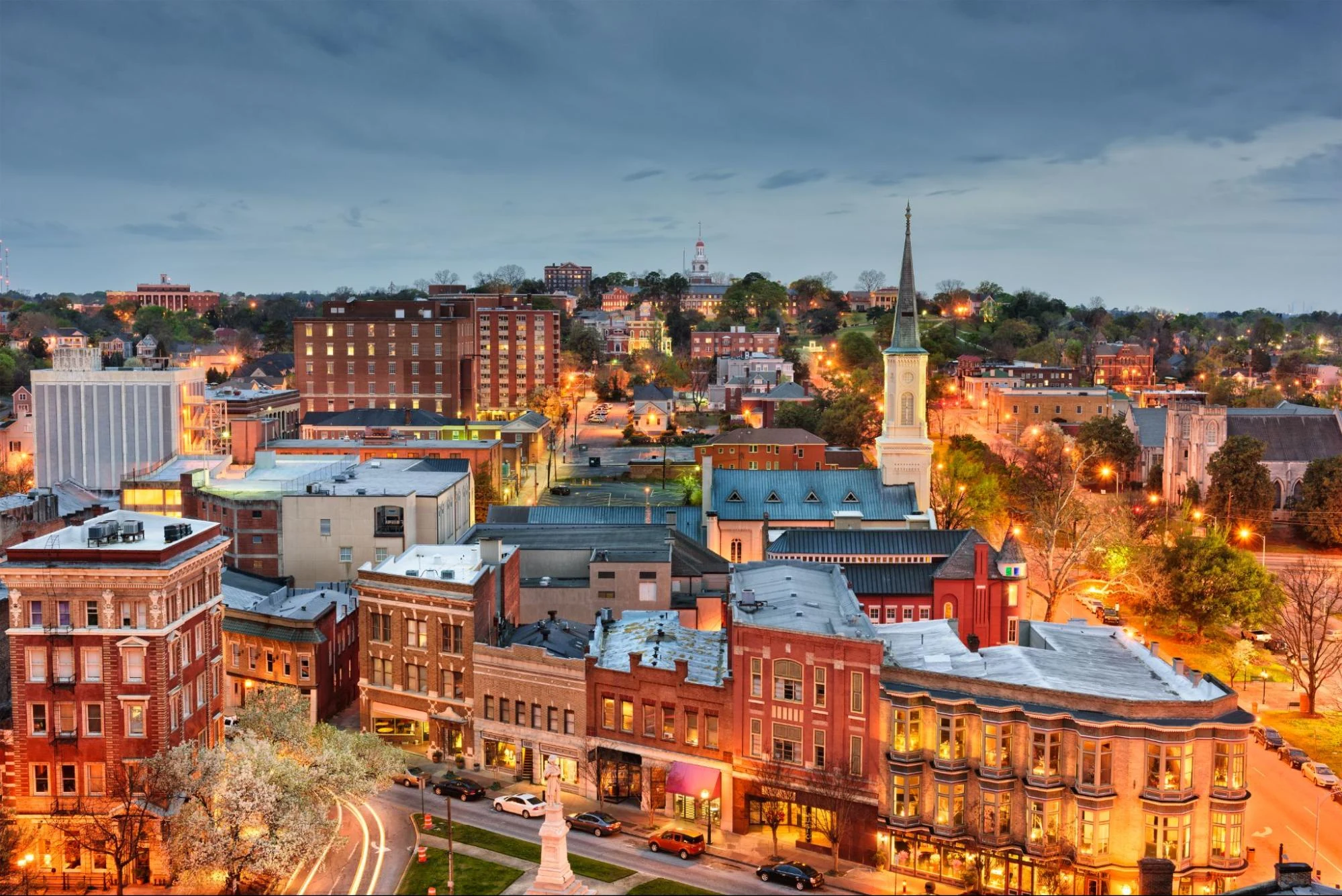
Downtown Juliette is genuinely small, a row of buildings tied to the old grist mill and cotton mill era, most now holding the café made famous by the movie filmed there, along with a few gift shops and a bed-and-breakfast. These are older structures with steep-slope roofs in most cases, not the low-slope commercial systems that dominate the plant side of town, and repair work here is about matching materials to a historic storefront rather than specifying a membrane system.
We don't inflate what's here. It's a tourist stop with a handful of roofs, not a commercial district, and any contractor telling you otherwise about Juliette hasn't actually been there. We'd rather price the two or three roofs that actually need attention accurately than pad a scope to make the visit seem worth a larger invoice.
Work tied to a major generating facility usually comes with its own contractor requirements on top of a standard bid package, safety certifications, insurance minimums well above what a typical retail job would require, and sometimes a formal pre-qualification step before a bid is even accepted. We keep our safety documentation and insurance certificates current so we're not scrambling to qualify when an RFP window opens. A missed pre-qualification deadline can knock a contractor out of consideration entirely on utility-adjacent work, which is why we treat that paperwork as a standing task rather than something we start once a bid notice lands.
The river corridor picks up humidity that lingers into the morning even after a clear night, which keeps moisture in contact with roof surfaces longer than it would on higher, more open ground. That matters for membrane seams and for the fastener heads on the historic buildings' metal roofing, where a small gap left uncaulked becomes a slow leak over a season rather than an obvious one.
Summer storms rolling through Middle Georgia can bring hard, brief downpours, and a roof carrying ash or dust buildup drains differently than a clean one, since sediment can slow water at low points instead of letting it move straight to the drain. We check drainage on any roof we service here rather than assuming it behaves like a standard commercial membrane.
We work on ancillary and support structures around the site, not the generating units themselves, and we coordinate all access through the site's safety and security process.
Yes. Repair work there is scoped to the existing roofing material and profile rather than replacing it with a modern commercial system that wouldn't fit the structure.
Fine particulate that sits on a membrane holds moisture longer at the surface, which is a real factor in service life, so we build inspection frequency around it rather than ignoring it.
Yes, and we keep them current specifically because utility-adjacent bids often require documentation up front before a contractor can even submit.
Realistically it's a small number of roofs split between two very different property types, which is why we plan visits around actual need rather than a fixed route.